But, beyond publications, the pleasure to understand and create
Biredox Ionic liquids
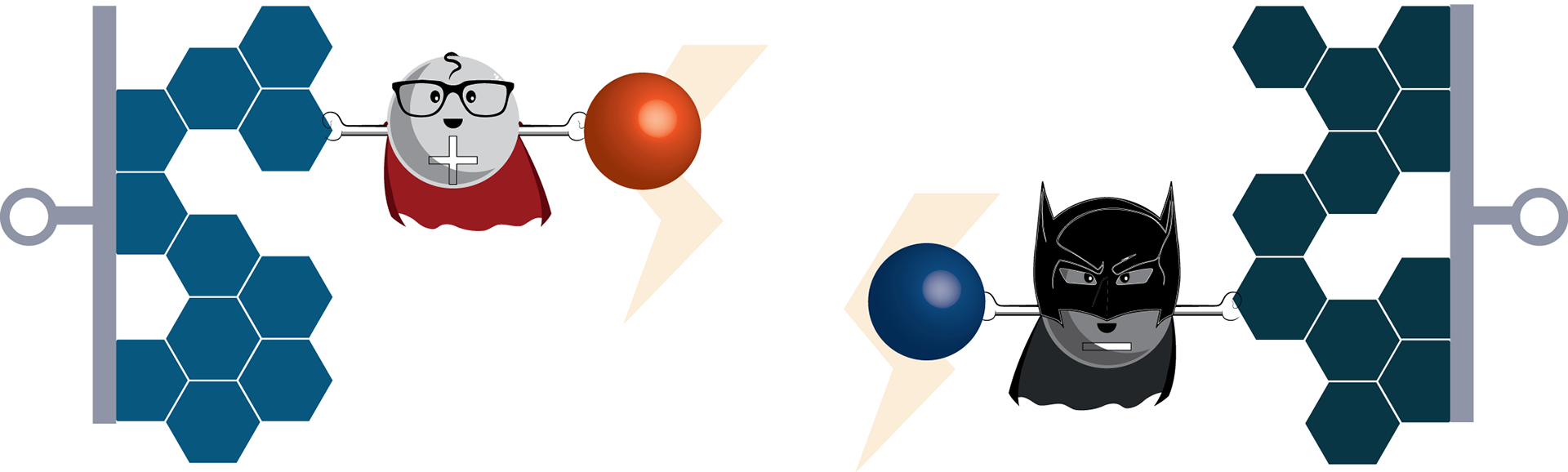
Biredox ionic liquids (BILs) are a type of ionic liquid engineered to incorporate two distinct redox-active centers within a single molecule. This dual-redox functionality allows each BIL molecule to store and release energy through two separate redox processes, enhancing the molecule’s overall energy-storage capacity. Typically, these redox centers are represented as two distinct sites within the molecule, each capable of undergoing reversible oxidation and reduction. BILs are particularly promising for energy storage applications like supercapacitors, as they combine the stability and ionic conductivity of traditional ionic liquids with an increased energy density due to the dual redox sites.
Water-In-Salt
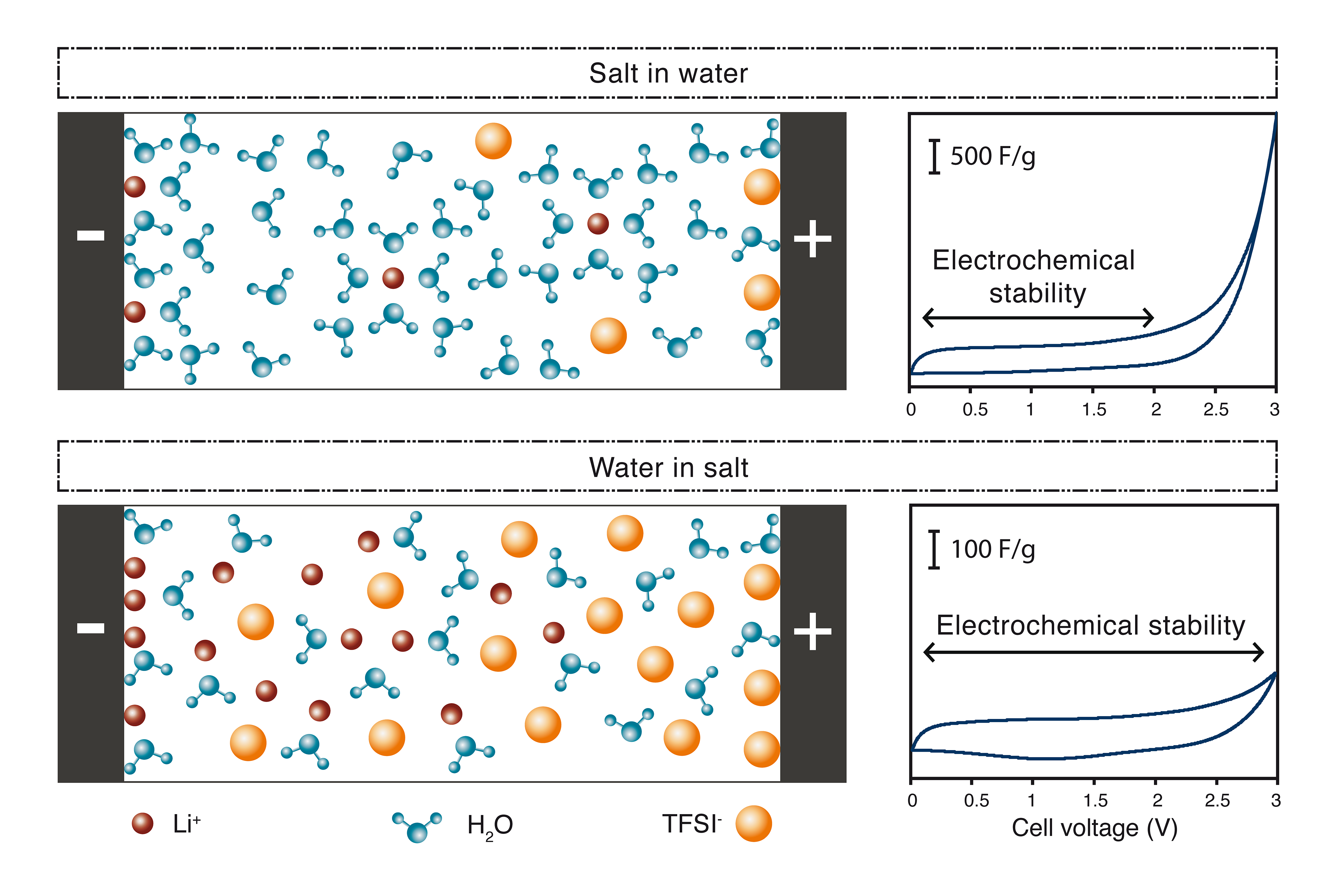
The "Water-in-Salt" (WiS) electrolyte concept, explored by Olivier Fontaine and others, is a high-concentration aqueous electrolyte system where salt concentration is increased to the point that water molecules become primarily coordinated with salt ions. This structure reduces the availability of free water, thereby suppressing unwanted side reactions such as water decomposition. This results in a wider electrochemical stability window, typically above 3V, making it suitable for advanced energy storage applications like supercapacitors and batteries.
Fontaine’s work on WiS electrolytes has contributed significantly to this field by optimizing the electrolyte composition and understanding the underlying mechanisms that enable these high-stability windows. By manipulating interactions between water and ions, Fontaine’s contributions help enhance ion transport properties and stability, advancing the potential of aqueous systems to achieve performance previously limited to non-aqueous systems. This shift makes WiS electrolytes a safer, more environmentally friendly option for energy storage devices.
This work was in collaboration with: Daniel Bélanger, from UQAM, Jean Marie Tarascon, from Collège de France, Alexis Grimaud, from Boston Collège.
Redox Shuttle for Li-Air Battery
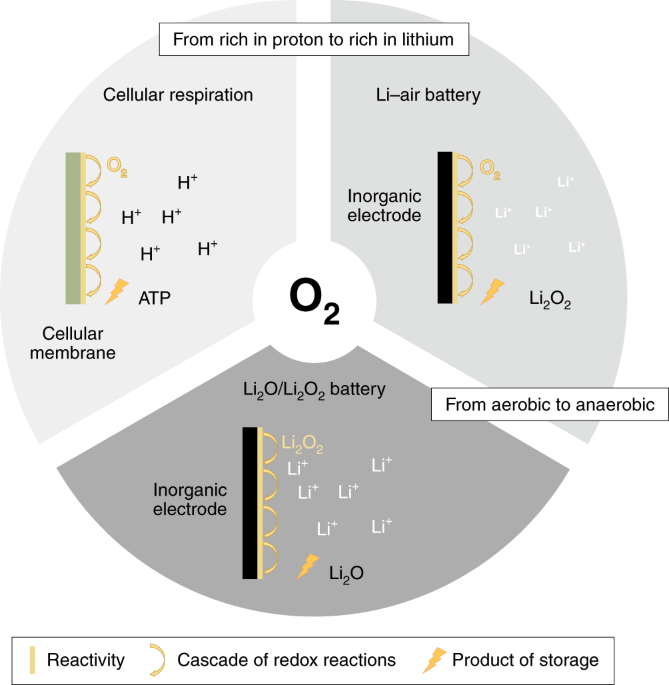
O.F contribution to the redox shuttle in lithium-air batteries lies in the development and optimization of redox mediators, crucial for enhancing cycling efficiency and stability. By focusing on electrolyte chemistry and exploring redox ionic liquids, they have advanced the understanding of electron and ion transport mechanisms within these battery systems. This work has significantly impacted the reduction of overpotentials and allowed for more precise control over electrochemical reactions, which is vital for extending the lifespan of lithium-air batteries. Additionally, their rigorous and creative approach has driven research toward more sustainable energy solutions, leveraging the unique properties of redox ionic liquids to stabilize and improve lithium-air cell performance.
Overall, their expertise in electrochemistry and scientific precision has contributed notably to the understanding and improvement of the redox shuttle in lithium-air batteries.
This work was in collaboration with : Peter G. Bruce, from Oxford university, Stefan A. Freunberger, from ISTA.
Deep learning to analyze electrochemical signal of batteries& supercapacitors
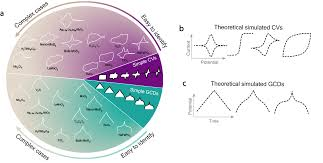
This study employs deep learning to enhance the design and performance prediction of redox-active materials in energy storage systems. By integrating machine learning algorithms with electrochemical data, the research aims to optimize the properties of ionic liquids and capacitive materials, providing insights into their stability, conductivity, and charge retention. This innovative approach enables the rapid screening of materials, streamlining the discovery and improvement process for high-performance energy storage devices, ultimately contributing to more efficient and sustainable energy solutions.
This work was in collaboration with: T. Brousse, from Nantes University.